






Why the 2005 Kansas Quarter Still Turns Up in Dealer Trays
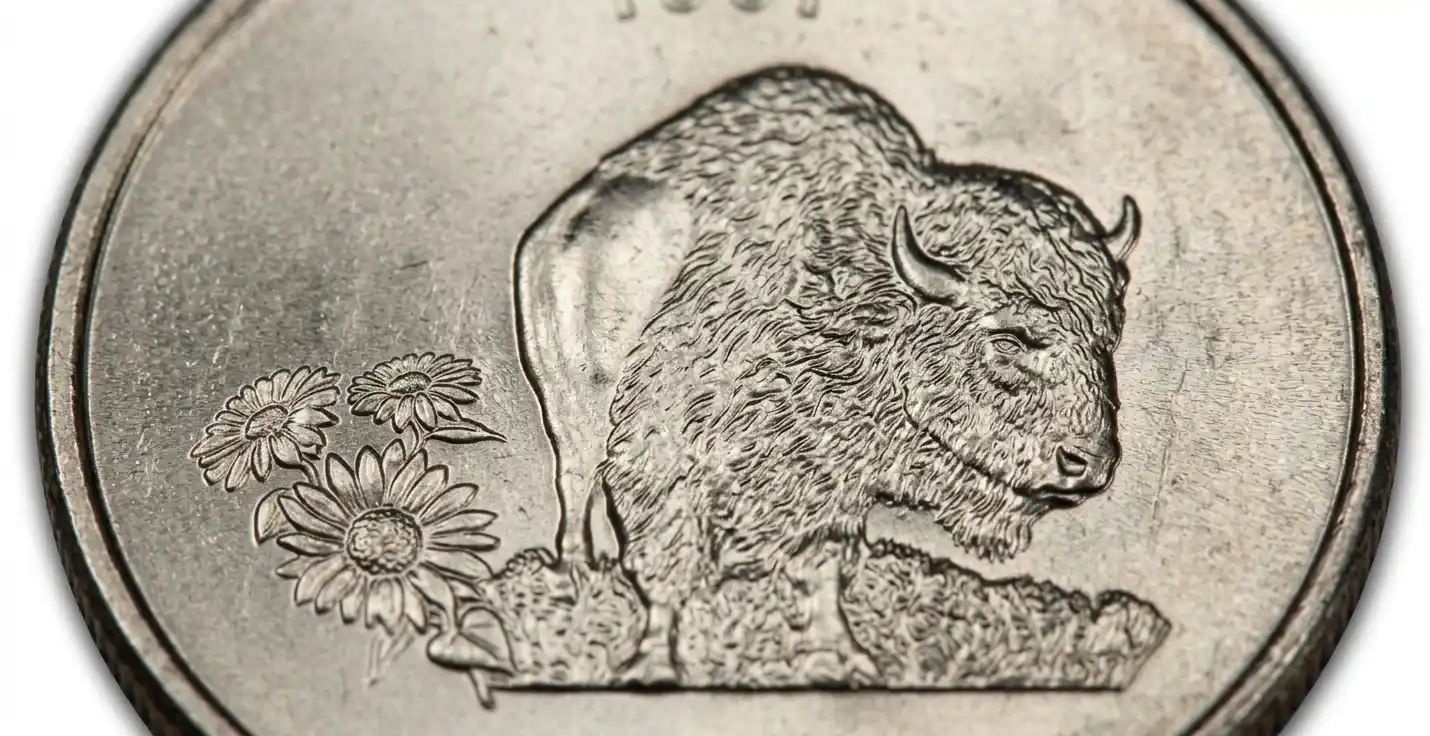
Ordinary specimens remain common payment tools across daily commerce.
Unique versions displaying distinct characteristics consistently attract experienced collectors.
Production of this coin represented a massive national program issuing commemorative quarters for every state.
Massive production numbers fail to eliminate potential rare finds.
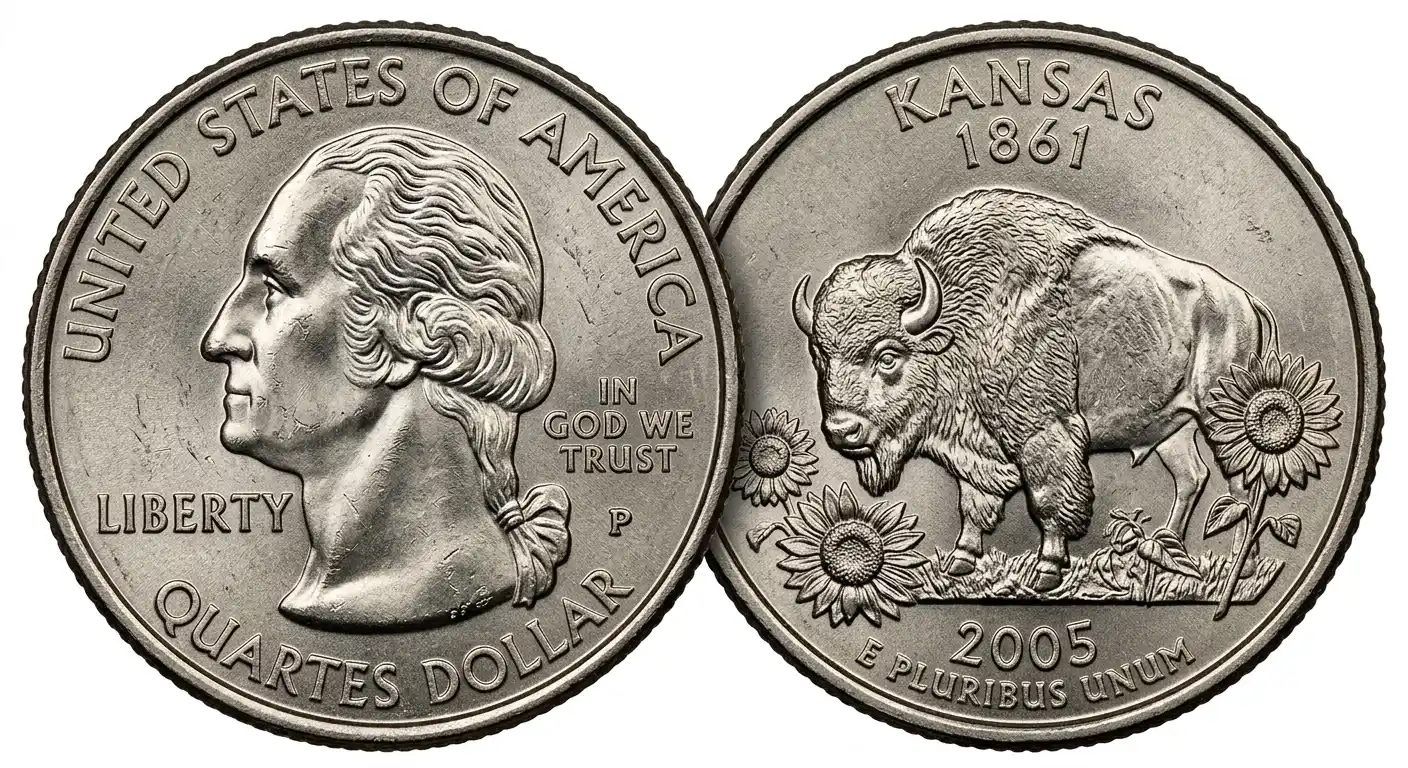
The 2005 Kansas quarter value depends directly on relief preservation quality.
Technical Parameter | Value |
Total mass | 5.67 grams |
Outer diameter | 24.26 millimeters |
Edge thickness | 1.75 millimeters |
Internal layer composition | Copper 91.67% |
External layer composition | Nickel 8.33% |
Edge type | Reeded |
Deviations in mass exceeding standard norms signal planchet errors or equipment defects.
Using grams exclusively allows for precision during professional assessment.
Mintage Distribution Across Mint Facilities
Production facilities divided output between two primary plants.
Philadelphia branch manufactured 287200000 pieces for current circulation.
Denver branch issued 286000000 pieces for current circulation.
Production volume for each facility remains comparable.
Market data confirms an absence of clear rarity for standard coins from both series.
Production Errors Driving Market Value
Manufacturing defects create unique varieties enjoying demand on the numismatic market.
In God We Rust
Defects of this type arise from working die wear used during minting.
Extreme press pressure causes damage to the steel die surface in the motto area.
Letter T becomes replaced by letter R due to metal flow.
Resulting phenomena stem from partial die metal breakdown during long equipment operation.
Market price dynamics for this error:
2024 price: $15.00 per piece
2025 price: $28.00 per piece
2026 price: $45.00 per piece
Extra Leaf Detail
Reverse defects manifest as an extra metal line on plant leaves.
Excess metal hits the planchet surface at the moment of strike.
Defect cause → Die steel chipping in the complex relief area.
Individual specimen value increases with a sharp element outline.
Market price dynamics for this error:
2024 price: $10.00 per piece
2025 price: $19.00 per piece
2026 price: $32.00 per piece
Minor die damage often remains unnoticed without a coin value checker.
Off-Center Strike
Uncentered press strikes result in image displacement relative to the coin center.
Field portions remain empty, keeping the unworked planchet appearance.
Ten percent displacement adds a minimal bonus to coin market price.
Significant value growth appears with displacement exceeding thirty percent.
Market price dynamics for thirty percent displacement:
2024 price: $110.00 per piece
2025 price: $160.00 per piece
2026 price: $220.00 per piece
Preserving the issue date on uncentered specimens ensures maximum value for any lot.
Die Clogging
Press lubricant enters the die surface.
Process result → Absence of relief portions on the finished coin.
Distortion of motto elements or fine design details lowers image readability.
Coin value varies based on missing relief area.
Market price dynamics for die clogging:
2024 price: $5.00 per piece
2025 price: $9.00 per piece
2026 price: $15.00 per piece
Coins lacking design elements possess low investment appeal.
Condition Assessment Using Sheldon Scale
Final market value depends directly on the preservation class.
Specialists classify metal condition on a scale from 1 to 70.
Coin Condition | 2024 price | 2025 price | 2026 price |
MS66 | $6.00 | $9.00 | $13.00 |
MS67 | $30.00 | $45.00 | $65.00 |
MS68 | $450.00 | $650.00 | $900.00 |
MS68 class coins demonstrate a total absence of microscopic field nicks.
Such specimens undergo mandatory assessment procedures by independent companies.
Adhering to storage conditions guarantees high class rating preservation.
Long-Term Storage Conditions
Proper placement prevents alloy chemical degradation.
Surrounding environments exert constant influence on nickel coating surfaces.
Primary metal threats:
High air humidity
Sulfur compound presence
Constant friction
Capsules made from neutral materials protect coins from direct air contact.
Bags containing vinyl cause irreversible metal color changes.
Storage in dark locations minimizes negative ultraviolet radiation impact.
Regular collection checks assist in timely corrosion sign detection.
Temperature control extends coin appearance preservation.
Professional Specimen Certification
Assessment procedures confirm coin authenticity and condition class.
Expertise stages:
Alloy composition verification
Surface inspection via free coin apps
Class assignment using Sheldon scale
Placement in plastic holders
Certified coins sell faster, gaining trust from buyers.
Appraiser service costs require comparison against potential coin value.
Sending low-quality coins for certification constitutes economically irrational action.
Professional expertise usage excludes forgery acquisition risks.
Market Change Dynamics
Statistical analysis demonstrates stable interest regarding rare 2005 specimens.
Category | Annual price increase |
Ordinary coins | 0% |
In God We Rust errors | +40% |
MS68 condition | +25% |
Stable demand regarding production errors stems from rarity within total production volume.
Investing in high-quality specimens protects capital against inflation influence.
Absence of interest regarding ordinary coins explains massive volumes circulating.
Consistent removal of quality coins from circulation creates long-term supply shortages.
Search Tactics for Rare Coins
Rare variety searching requires systematic approaches.
Coin operation algorithm:
Viewing bank rolls
Checking coin edge
Studying fine relief details
Purchasing sealed bank boxes allows finding coins in ideal condition.
Absence of circulation traces guarantees original mint luster preservation.
Magnifying devices with ten-fold power prove necessary for precise error definition.
Sorting material requires significant time investment.
Successful results depend on volume of viewed specimens.
Deal Analysis Recommendations
Transaction execution requires preliminary market analysis.
Comparing prices across platforms allows locating best options.
Real coin value assessment should not rely solely on seller opinion.
Checking sales history for similar lots assists in avoiding overpayment.
Personal acquaintance regarding item condition remains a mandatory safety condition.
Using independent platforms for mediation reduces fraud risks.
Documenting transaction history facilitates asset resale processes.
Buyer information serves as primary weaponry under competitive market conditions.
Exercising caution when working with new sellers prevents losses.